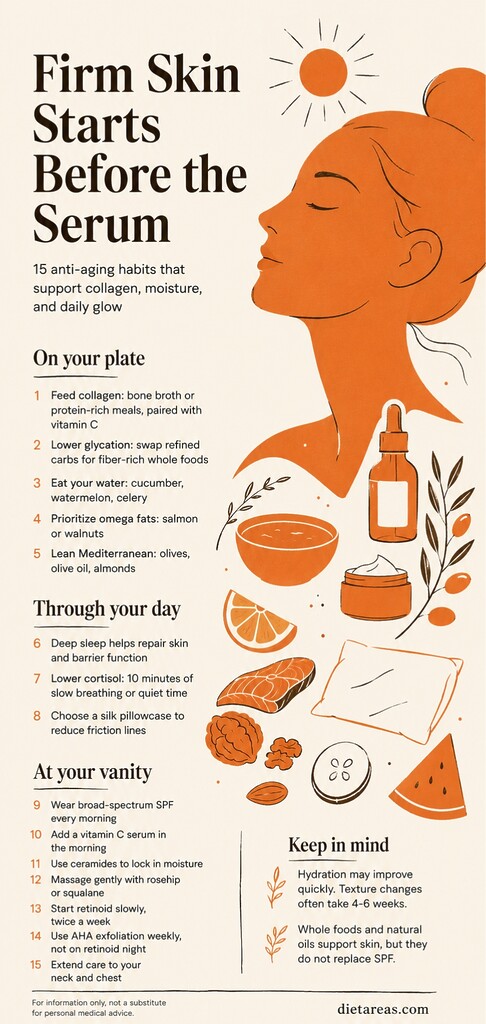
Most anti aging skincare tips focus entirely on what you rub into your face. Real radiance is a complete ecosystem that starts on your plate, builds through your daily habits, and finishes at your vanity. Let us fix the foundation first.
Building a Skincare Routine for Wrinkles from the Inside Out
1. Feed Your Collagen Matrix
Collagen is the structural protein that keeps your cheeks plump and firm. You cannot simply apply it topically because the molecules are too large to penetrate deeply into the dermis. You have to feed it. A rich bone broth simmered slowly with carrots and onions gives your body the amino acids that support connective tissue. Pair it with a squeeze of fresh lemon or sliced bell peppers, since vitamin C is the required catalyst for collagen synthesis in the body.
2. Defend Against Glycation
When I was managing my own hormonal imbalances with PCOS, my complexion was the first place the metabolic chaos showed up. High blood sugar physically ages you. Sugar molecules bind to proteins in your bloodstream and create advanced glycation end products. These compounds literally stiffen your collagen fibers. Swapping refined carbohydrates for complex, fiber-rich whole foods helps protect your skin’s elasticity right at the cellular level.
3. Eat Your Water
Drinking a gallon of plain water a day often just sends you to the bathroom. For real cellular hydration, you need water bound to structure. Cucumbers, watermelon, and celery hold water within their plant cells. They release that moisture slowly into your system alongside essential electrolytes, keeping your face looking plump and awake for hours longer than a glass of tap water.
4. Prioritize Omega Fatty Acids
A piece of wild-caught salmon flaking perfectly on the fork does more for your moisture barrier than most expensive night creams. Healthy fats calm systemic redness and keep the cell walls incredibly supple. Aim for three servings of fatty fish a week, or toss a heavy handful of walnuts into your morning oatmeal to lock moisture into your skin.
5. Snack on Mediterranean Staples
The healthiest populations in the world do not rely on complicated chemical peels to look vibrant. They eat fresh olives, pour rich olive oils over their vegetables, and snack on almonds. These ingredients are packed with natural polyphenols that defend your body from oxidative stress from the inside out.
6. Sleep for Cellular Repair
Your body does some of its deepest restorative work during deep, uninterrupted sleep. Chronic poor sleep is linked with more visible skin aging, weaker barrier function, and slower recovery. Keep your bedroom cool, dark, and strictly reserved for resting to give your cells the uninterrupted time they need to rebuild.
We spend too much time treating our skin like a canvas to be painted over, rather than a living organ that needs to be fed.
7. Lower Cortisol Spikes
Continuous stress keeps you in a state of fight or flight, drawing vital resources away from non-essential functions like tissue repair. High cortisol can suppress the collagen you are working so hard to build. Taking ten minutes to sit quietly and practice deep breathing signals to your nervous system that it is safe to heal.
8. Switch to a Silk Pillowcase
We spend a third of our lives pressing our faces into fabric. Standard cotton grips the skin and creates micro-creases that eventually become permanent wrinkles over the years. Silk provides a frictionless surface that lets your face glide freely as you shift in your sleep.
9. Apply Daily Broad Spectrum SPF
While nutrition builds your skin from the inside, unprotected UV exposure remains the single biggest external threat to your collagen. Nutrition gives your skin resilience, but sunscreen provides the armor. Find a mineral sunscreen with zinc oxide that blends well and commit to applying it every morning as the final step before leaving the house.
10. Add an Antioxidant Serum
Think of antioxidants as a protective shield against daily pollution and environmental stress. A stabilized vitamin C serum applied every morning neutralizes free radicals in the air before they can break down your healthy tissue. Apply it right after washing your face and before your moisturizer.
11. Lock in Moisture with a Lipid Barrier
Think of your skin cells as bricks. Ceramides are the mortar holding them together. When that mortar degrades from age or harsh cleansers, moisture escapes and fine lines look immediately deeper. Look for a daily moisturizer that lists ceramides near the top of the ingredient deck to seal in your natural hydration and plump up shallow wrinkles.
12. Stimulate Circulation Manually
Stagnant lymph fluid makes the face look heavy, tired, and dull. Taking three minutes in the evening to massage your face with a few drops of pure rosehip or squalane oil brings fresh oxygen right to the surface. It drains the fluid that pools under the eyes and highlights your natural bone structure.
13. Incorporate a Targeted Retinoid
Vitamin A derivatives are among the best-studied topical anti wrinkle treatments. They encourage cellular turnover and support visible wrinkle improvement over time. Start with a mild over-the-counter retinol twice a week at night. Sandwich the retinol between two layers of a basic moisturizer to prevent flaking while your skin adjusts.
14. Exfoliate with Chemical Acids
Physical scrubs can create tiny tears in your moisture barrier. Liquid exfoliants like lactic acid simply dissolve the glue holding dead cells to the surface. Using an alpha-hydroxy acid just once a week reveals the brighter layers underneath without any abrasive rubbing. Always use your acid on a different night than your retinol to avoid severe irritation.
15. Extend the Care to Your Neck
Your skincare routine for wrinkles should never stop at your jawline. The skin on your neck and chest is incredibly thin and loses elasticity rapidly. Whatever antioxidant serum, moisturizer, or sunscreen you apply to your face needs to travel all the way down your décolletage to protect this vulnerable area from matching the chronological signs of aging.
Frequently Asked Questions
How long does it take to see results from a new skincare routine for wrinkles?
Cellular turnover varies, often landing around four to six weeks for adults and naturally slowing as we age. You will notice better hydration almost immediately, but you should give any new active product at least six full weeks before deciding if it actually improves your skin texture.
Can natural anti aging remedies replace sunscreen?
Absolutely not. Natural oils, antioxidants, and a whole-food diet profoundly support your cellular health, but nothing replaces the physical block of a broad spectrum SPF against direct UV radiation.
You do not need to implement all 15 strategies by tomorrow morning. Pick one dinner ingredient to swap and one nighttime serum to add to your routine. Consistency over a few months will always outperform a frantic weekend of heavy treatments. True radiance is just the visible evidence of a well-nourished life.






 This post may contain affiliate links.