We all know we should move more. But when the couch is comfortable and the day has been exhaustingly long, a vague sense of obligation is rarely enough to get your shoes on. You need a much better reason.
As an independent wellness researcher, I spend hours looking at clinical data. The science around human movement is incredible. But as someone who loves a cozy evening, I know that statistics do not get you out the door. How you feel right now is what actually matters.
I am sharing my own metabolic healing experience and research here. Always check with your doctor before starting any new fitness routine.
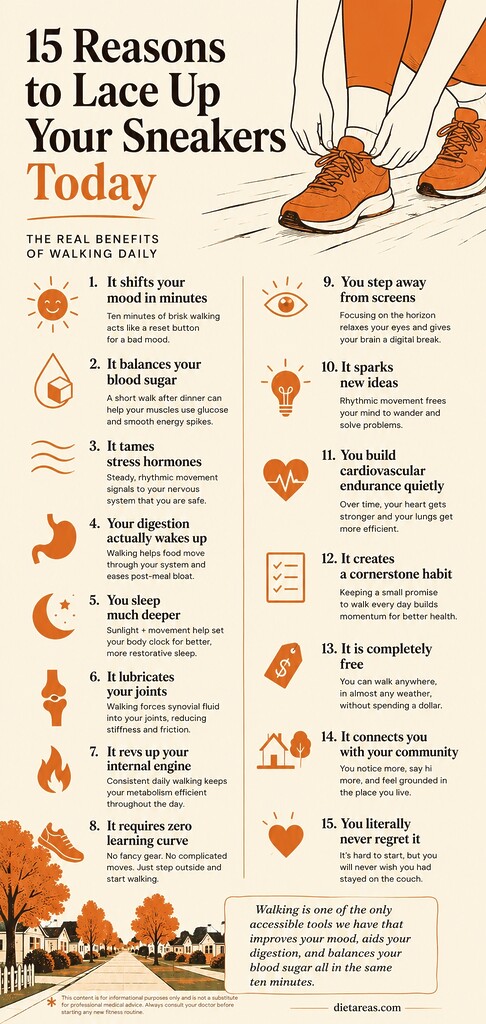
The Real Benefits of Walking Daily
1. It shifts your mood in minutes
You do not have to wait weeks to feel the psychological payoff of exercise. A brisk walk can start shifting your mood almost immediately. Ten minutes of brisk walking acts like a reset button for a bad mood, clearing out tension and leaving you noticeably lighter.
2. It balances your blood sugar
When I was working to heal my own metabolic health and reverse prediabetes, I learned a simple secret. A short walk right after dinner can help your muscles use glucose from your bloodstream. This can soften those big energy spikes and crashes that leave you craving sugar right before bed.
3. It tames stress hormones
Intense workouts are great, but they can sometimes spike stress hormones if your body is already exhausted. Walking does the exact opposite. As someone who manages PCOS, keeping my stress levels managed is a daily priority. Steady, rhythmic movement signals to your nervous system that you are safe.
4. Your digestion actually wakes up
If you feel bloated or heavy after a rich meal, staying seated is the worst thing you can do. Walking physically helps food move through your system, which is why a post-meal stroll is a staple in many cultures around the world. It stimulates your digestive tract naturally without needing supplements.
Walking is one of the only accessible tools we have that improves your mood, aids your digestion, and balances your blood sugar all in the same ten minutes.
5. You sleep much deeper
Getting outside exposes your eyes to natural daylight. This helps set your circadian rhythm. Pair that sunlight exposure with the physical exertion of walking, and your body may be more likely to settle into better, more restorative sleep by the time your head hits the pillow.
6. It lubricates your joints
There is a saying in physical therapy that motion is lotion. Sitting for eight hours stiffens your hips, knees, and ankles. Walking forces synovial fluid into those joints. It feels a bit rusty for the first block, but soon your whole lower body moves with much more freedom.
7. It revs up your internal engine
You do not need to run a marathon to support your metabolism. Consistent daily walking builds a foundation of baseline activity. It keeps your body burning energy efficiently throughout the day instead of slipping into a sluggish, sedentary state.
8. It requires zero learning curve
One of the biggest hurdles to starting a fitness routine is the intimidation factor. You do not need to learn complex choreography or buy expensive gear. You just step outside and put one foot in front of the other. The barrier to entry is practically zero.
9. You step away from screens
We spend most of our waking hours staring at objects less than two feet from our faces. Walking outside forces your eyes to focus on the horizon. This simple shift in vision actually relaxes the nervous system and gives your brain a much-needed break from digital stimulation.
10. It sparks new ideas
There is a reason so many writers and artists swear by their daily walks. When your body is occupied with a rhythmic task, your subconscious mind is free to wander. If you are stuck on a problem at work, leaving your desk for fifteen minutes is often the fastest way to solve it.
11. You build cardiovascular endurance quietly
Walking is one of the most effective easy ways to get active. Over time, your heart gets stronger and your lungs get more efficient. You will notice it first when you carry groceries up a flight of stairs and realize you are no longer completely out of breath.
12. It creates a cornerstone habit
Success breeds success. When you keep a small promise to walk every day, that momentum naturally spills over into taking better care of yourself. You start wanting to drink more water, eat more nourishing meals, and protect your evening routine.
13. It is completely free
Gym memberships are expensive. Boutique fitness classes add up fast. But the sidewalk costs nothing. You can walk anywhere, in almost any weather, without spending a single dollar.
14. It connects you with your community
When you walk your neighborhood regularly, you start to notice the seasons changing. You see your neighbors. You pet the local dogs. You feel grounded in the place you live rather than just driving straight through it.
15. You literally never regret it
This is the ultimate truth of movement. It can be incredibly hard to start. The couch exerts a very real gravitational pull. But once you finish and walk back through your front door, you will never wish you had stayed seated.
Frequently Asked Questions About Walking
How long do I need to walk for it to count?
Every single step counts. If you only have ten minutes, take ten minutes. Research indicates that short bouts of brisk walking throughout the day can support cardiovascular risk markers and mood. Do not let the idea of a perfect 45-minute workout keep you from a highly effective 15-minute walk.
What if the weather is terrible?
Adapt your environment. If it is pouring rain or freezing, walk laps inside your house while listening to a podcast. Walk the perimeter of a large grocery store. March in place in your living room. The location matters far less than the actual movement.
What if I miss a few days?
You will miss days. Life happens, schedules explode, and sometimes you just need to rest. The biggest mistake you can make is deciding that a broken streak means you have failed. A missed day is just a missed day. Just pick up your routine again tomorrow morning.
You do not have to commit to a massive lifestyle overhaul today. You just have to decide that you want to feel a little bit better in twenty minutes than you do right now.







 This post may contain affiliate links.