When my doctor first flagged my climbing blood sugar levels, I thought my life as a food lover was over. I assumed metabolic healing meant a rigid future of tracking every carbohydrate and eating plain chicken breast. But looking closely at the dietary patterns of the longest-living communities reveals a completely different approach to wellness.
The Japanese diet for longevity is not about what you remove. It is about what you actively add to your day. It is a culture that treats food as a multi-sensory experience while organically supporting digestion, glucose control, and heart health.
You do not need to move across the world or buy expensive imported ingredients to benefit. By arranging these Japanese healthy habits into a simple daily flow, you can build a lifestyle that protects your metabolism without giving up the joy of eating.
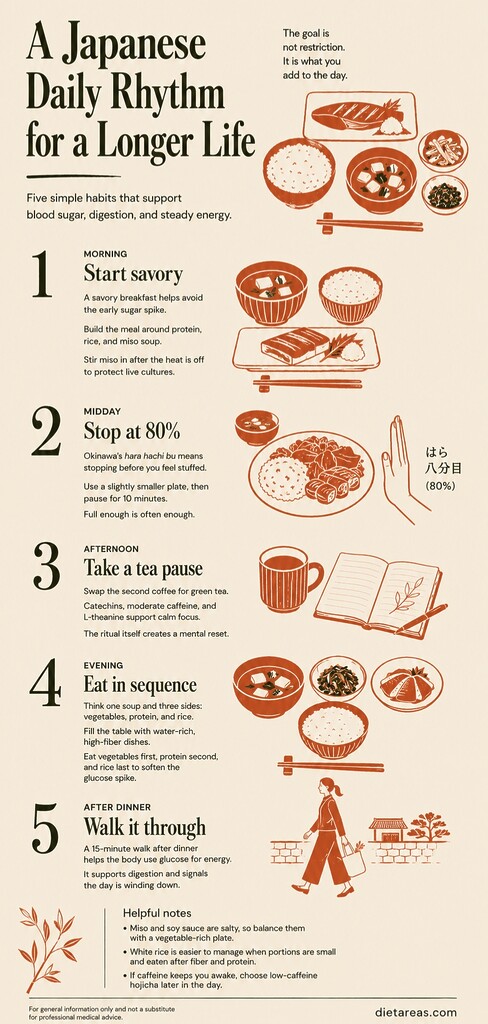
Morning: Savory Breakfasts and Gut Protection
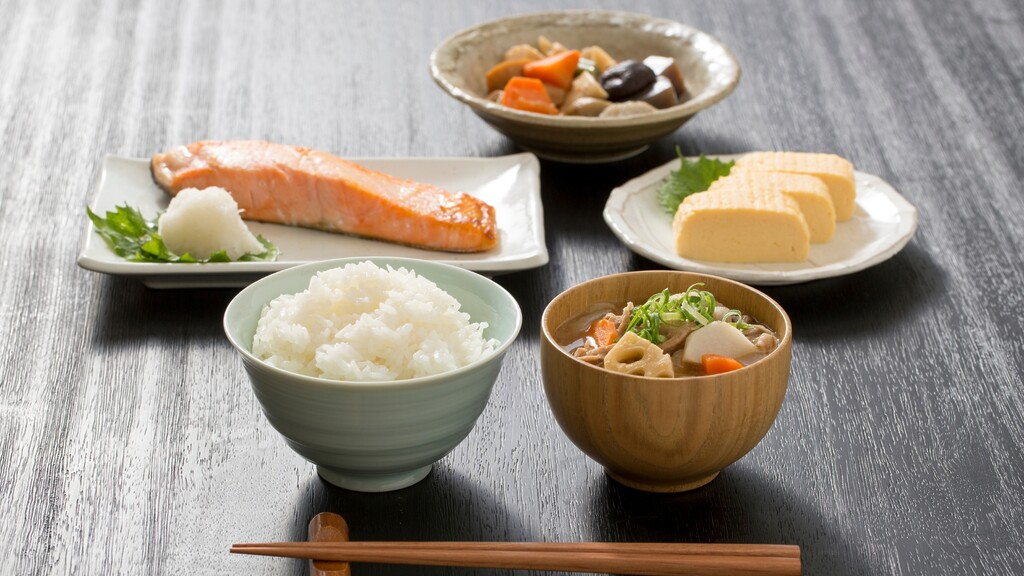
A standard American morning usually starts with a sugar spike, think pastries, sweetened yogurts, or cereal. In Japan, breakfast is often savory, setting a stable blood sugar baseline for the entire day. A typical morning meal includes a small portion of protein, rice, and miso soup.
Miso paste (fermented soybeans) is a cornerstone of this routine. Research links a healthy microbiome to everything from metabolic health to immune defense, and traditional Japanese cooking builds this support directly into the meal. But there is a crucial culinary rule here: boiling water kills beneficial bacteria.
To protect the live active cultures, stir your miso paste into the broth only after turning off the heat. If you are not making soup, you can achieve the same benefit by keeping a jar of unpasteurized sauerkraut or naturally fermented pickles (in brine, not just vinegar) in your fridge to eat alongside your morning eggs.
Midday: The Okinawan 80 Percent Rule
Most of us were raised to clear our plates, eating until we feel completely stuffed. This places an enormous digestive load on the body and often leads to an afternoon energy crash.
In the southern islands of Okinawa, one of the world’s renowned Blue Zones, locals practice a concept called hara hachi bu. They stop eating when they feel 80 percent full. Because it takes roughly 20 minutes for the stomach’s satiety signals to reach the brain, stopping just before you feel totally satisfied gives your body time to catch up.
You do not need a food scale to do this. Try serving your lunch on a slightly smaller plate. When you finish, pause for ten minutes. Notice the absence of urgent hunger rather than looking for a feeling of physical fullness. You will likely find you don’t need a second helping, and your afternoon focus will remain sharp.
Afternoon: The Green Tea Pause
When the 3:00 PM slump hits, it is tempting to throw back a second cup of coffee while staring at a screen. In Japan, the afternoon tea break serves a different purpose. Green tea, particularly matcha or sencha, provides a dose of catechins, powerful antioxidants linked to heart health markers and antioxidant defense.
More importantly, the ritual forces a pause. Brewing loose-leaf tea requires you to wait for the water to reach the correct temperature (boiling water turns green tea bitter) and wait for the leaves to steep. It creates a built-in mental break.
The combination of moderate caffeine and L-theanine (an amino acid found in green tea) can support focused alertness. Swap your afternoon coffee for green tea for a gentler-feeling lift.
Evening: Visual Volume and Glucose-Friendly Sequencing
A typical Western dinner often features a massive piece of protein next to a dense pile of starch. The traditional Japanese evening meal relies on a pattern called ichiju-sansai, which translates to one soup and three sides.
This is where the magic of caloric density comes in. Instead of one heavy plate, you sit down to a bowl of rice, a broth, and several tiny plates of water-rich, high-fiber foods like spinach, cucumbers, daikon radish, or seaweed. Because these side dishes take up physical space in your stomach for very few calories, you naturally fill up without overeating heavy starches or fats.
Serving multiple dishes also supports an incredible blood sugar hack: meal sequencing. Eat your fiber-rich vegetable sides first, your protein second, and your rice last. The fiber and protein slow digestion and significantly blunt the glucose spike from the carbohydrates, allowing you to enjoy your meal without putting your metabolism on a rollercoaster.
Post-Dinner: Urban Mobility as a Glucose Sink
While hara hachi bu comes from rural Okinawa, another powerful longevity habit comes from the bustling streets of Tokyo and Kyoto: continuous, incidental movement. Fitness there is not confined to a punishing 45-minute gym session; it is baked into the daily commute.
People walk to the train, navigate massive transit hubs, and carry groceries home. This low-level, frequent movement is exactly what the human body is designed for. More importantly, walking after a meal acts like a “glucose sink,” helping move sugar out of the bloodstream so your muscles can use it for energy.
You may not have a train station nearby, but you can take a 15-minute walk around your neighborhood immediately after dinner. It aids digestion, lowers your evening blood sugar, and signals to your brain that the day is winding down.
Common Questions About Japanese Longevity Habits
When you start applying these ideas to your own kitchen, a few practical concerns usually pop up.
What about the high sodium in miso and soy sauce?
It is true that traditional Japanese condiments are high in sodium. However, the traditional diet is also incredibly high in potassium from vegetables, seaweed, and sweet potatoes, which helps the body excrete excess sodium and manage blood pressure. If you are sensitive to salt, look for reduced-sodium miso and use soy sauce sparingly as a finishing touch rather than a primary cooking liquid.
I have blood sugar issues. Can I really eat white rice?
Many find that they can, provided they manage the context. Japanese portions of rice are small, usually served in a dedicated bowl the size of a teacup. Furthermore, eating fiber and protein before the rice (as mentioned above) changes how the body digests the starch. Finally, leftover rice that has been cooled in the fridge develops resistant starch, which can have a lower impact on blood glucose.
Will afternoon green tea disrupt my sleep?
Green tea contains about a third of the caffeine found in coffee, but it can still keep sensitive individuals awake. If you want the ritual without the buzz, try hojicha, a roasted Japanese green tea that is naturally very low in caffeine and perfect for late afternoons.
You don’t need a perfect diet to live well. By starting your day with a savory meal, pausing when you are almost full, eating your vegetables first, and taking a quiet walk after dinner, you build a resilient, healthy routine that feels entirely effortless.





 This post may contain affiliate links.