When my own metabolism felt completely stalled during my early struggles with insulin resistance, I assumed the only answer was grueling, breathless cardio. I spent months exhausted before realizing that stressing an already taxed body actively halts progress. If you want yoga poses to burn fat, the real shift happens when you stop punishing yourself and start building deep, functional strength. Lowering your stress hormones while forcing large muscle groups to hold your body weight is how you actually repair the system from the inside out.
Building Real Heat: The 15-Minute Metabolic Sequence
You do not need to twist yourself into a pretzel to see physical changes. For anyone searching for the best yoga poses for weight loss, the goal is simple: engage the largest muscles in your body to create an internal furnace.
To turn these individual movements into a legitimate fat burning yoga for beginners routine, you need to flow through them logically. Perform this sequence by holding each pose for 5 deep, deliberate breaths, moving directly from one shape to the next. Once you finish all seven, rest for one minute, then repeat the entire circuit two more times. The whole process takes about 15 minutes, moving smoothly from a standing position down to the floor.
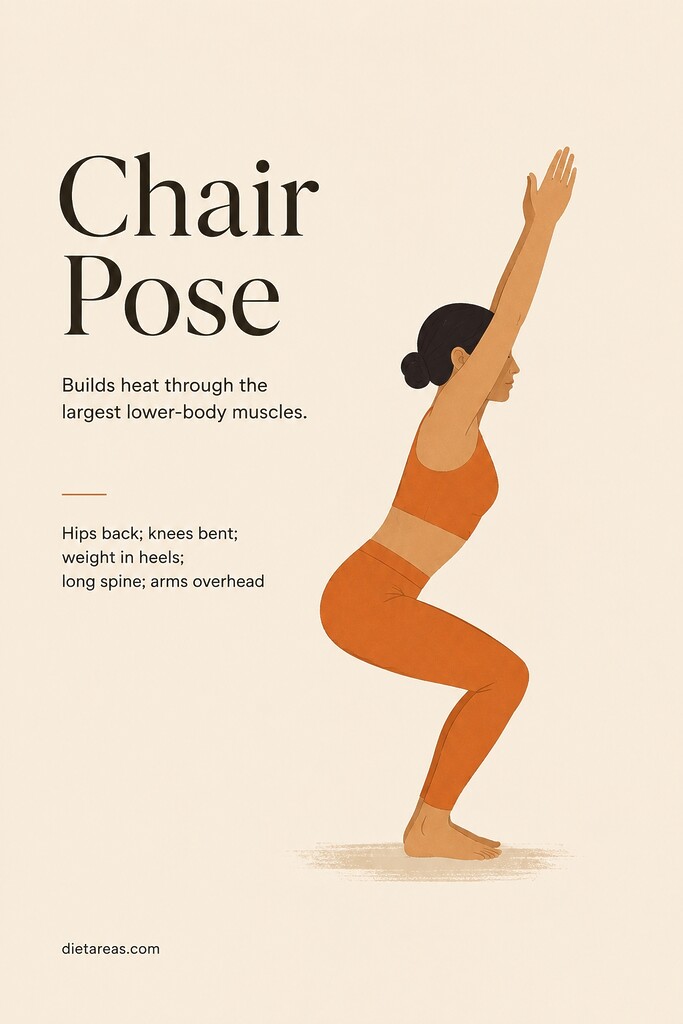
1. Chair Pose (Utkatasana): The Lower Body Furnace
This looks like sitting in an invisible chair, but it quickly turns into a full-body challenge. Chair pose targets your glutes and quadriceps. Because these are the largest muscle groups in your body, they require a massive amount of calories to stay activated during a static hold.
Stand at the top of your mat with your feet together and your big toes touching.
Inhale and sweep your arms overhead, keeping your palms facing inward.
Exhale and bend your knees, pushing your hips back exactly as if you were sitting down into a chair.
Shift your weight into your heels so you can comfortably wiggle your toes.
Hold the tension for 5 deep breaths, sinking one inch lower on your final exhale.
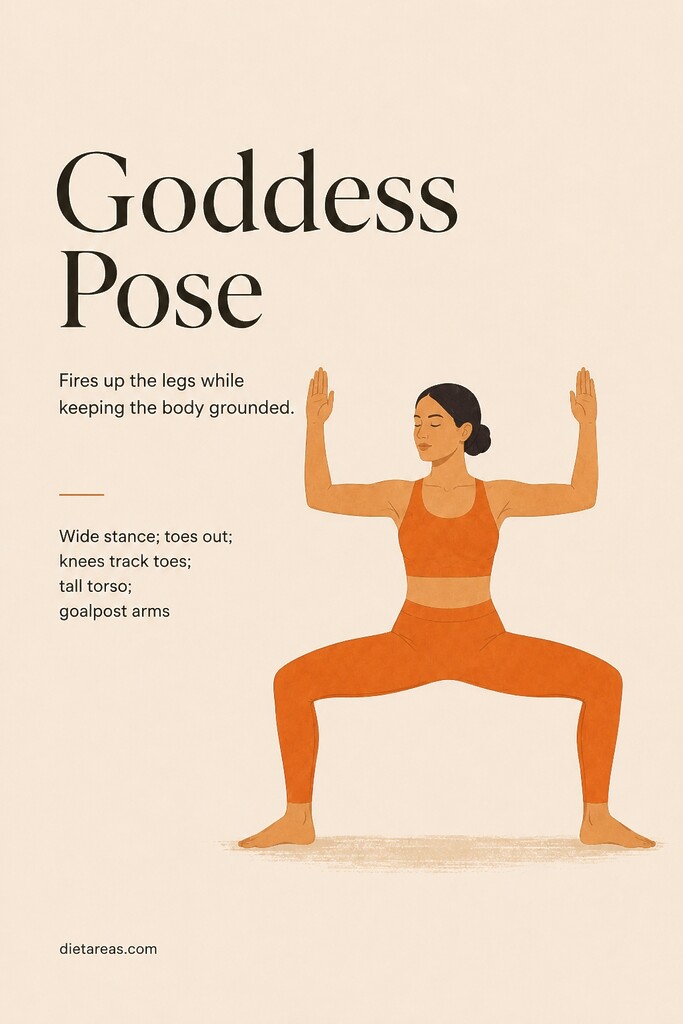
2. Goddess Pose (Utkata Konasana): The Inner Thigh Igniter
Stepping wide opens up the hips and shifts the workload to your inner thighs and lateral glutes. It is a highly grounding posture that instantly raises your heart rate without requiring a single jump.
From your chair pose, step your feet about three to four feet apart, turning your toes outward at a 45-degree angle.
Bend your knees deeply until your thighs are as close to parallel with the floor as possible.
Keep your knees tracking directly over your second and third toes, avoiding the urge to let them collapse inward.
Tuck your tailbone slightly to keep your spine straight, and bring your arms into a goalpost position.
Hold for 5 breaths, pressing firmly through the outer edges of your feet.
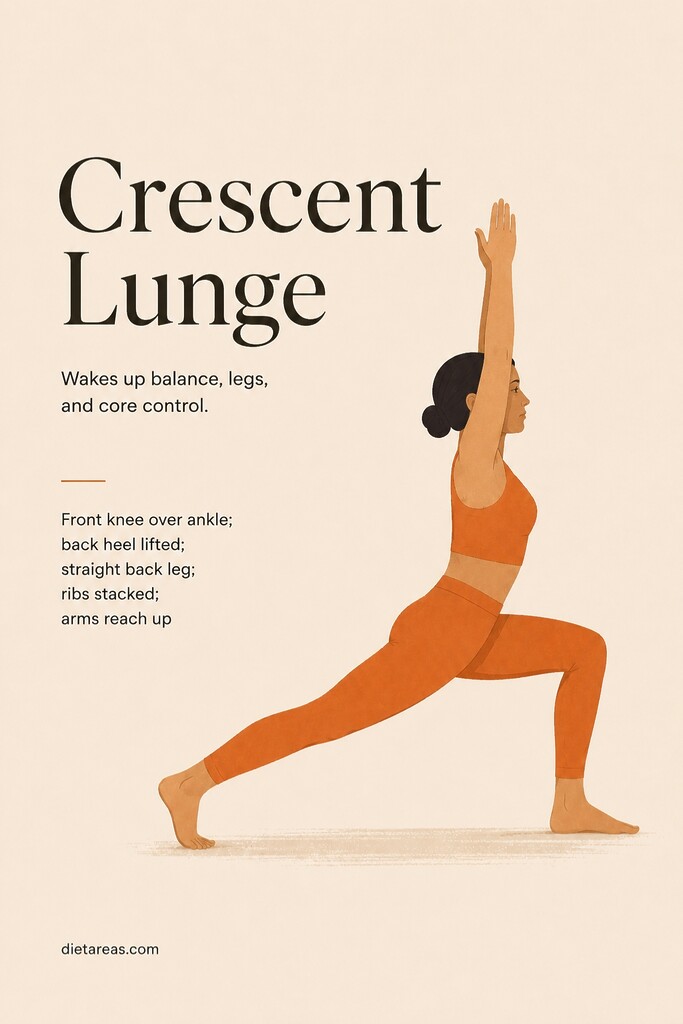
3. Crescent Lunge (Anjaneyasana): Stability and Power
Lunges force you to find balance on an uneven base. That physical instability requires your entire core to wake up and brace your spine, transforming a simple leg stretch into a demanding strength exercise that primes the body for the floor work ahead.
Turn to face the front of your mat and step your left foot straight back.
Keep your back heel lifted high off the floor to engage the calf.
Bend your right knee until it sits directly over your right ankle.
Pull your belly button slightly inward to protect your lower back, then reach your arms to the ceiling.
Hold for 5 breaths, then briefly switch legs for 5 breaths before stepping back completely.
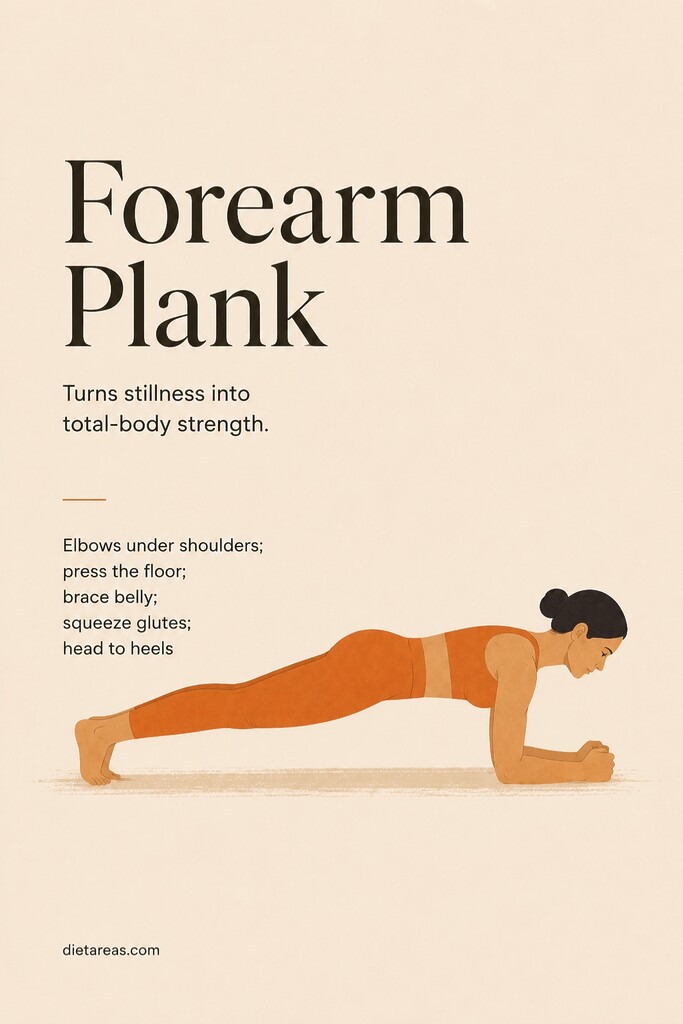
4. Forearm Plank (Makara Adho Mukha Svanasana): Total Tension
Transitioning to the floor, dropping to your forearms takes the pressure off your wrists and forces your midsection to carry the load. The secret here is active tension: do not just survive the hold, actively pull your elbows toward your toes to spike the muscular demand.
From your lunge, lower your hands and drop your forearms onto the mat, elbows directly under your shoulders.
Step both feet back until your legs are completely straight.
Squeeze your glutes tightly and brace your stomach as if you are about to cough.
Push the floor away with your forearms so your chest does not collapse downward.
Hold for 5 deep, slow breaths, maintaining a perfectly straight line from head to heels.
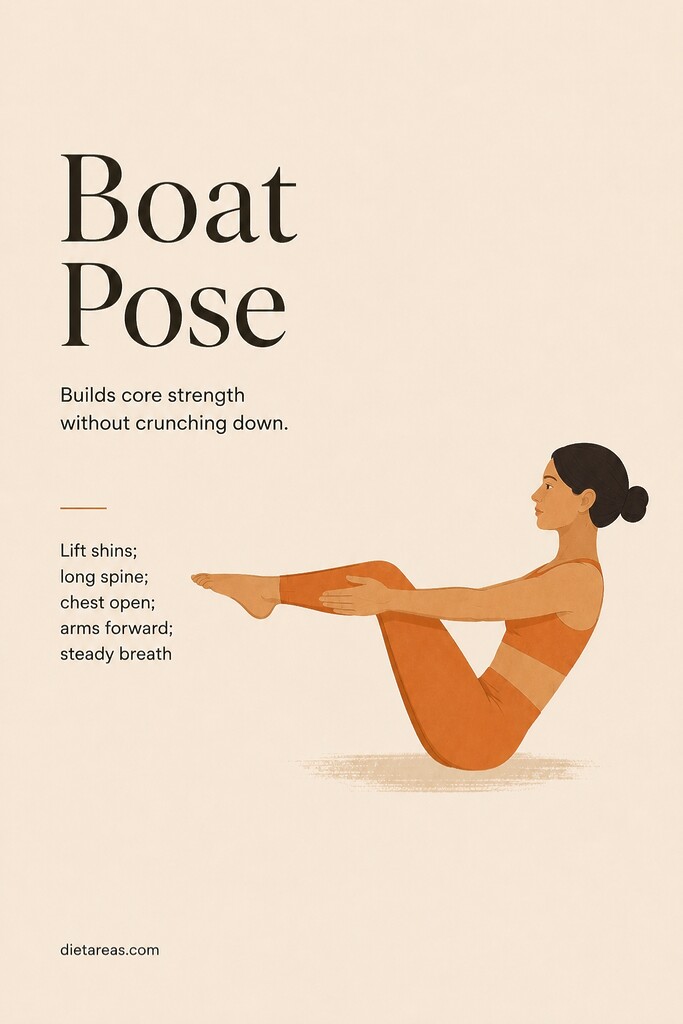
5. Boat Pose (Navasana): The Core Incinerator
Many readers ask how to lose belly fat with yoga. While you cannot spot-reduce fat, you absolutely can build the deep abdominal wall that pulls your midsection in tighter. Dropping your knees from the plank and swinging around to a seated position brings you right into this direct core challenge.
Sit on the floor with your knees bent and feet flat on the mat.
Lean your torso back slightly, keeping your spine completely straight and chest proud.
Lift your feet off the floor until your shins are parallel to the ceiling.
Reach your arms straight forward alongside your legs.
Hold for 5 breaths, focusing on keeping your chest lifted rather than letting your shoulders slump forward.
Building muscle is one reliable way to nudge your resting metabolic rate upward. You are not just burning calories while you hold the pose; you are building an engine that keeps using energy while you sleep.
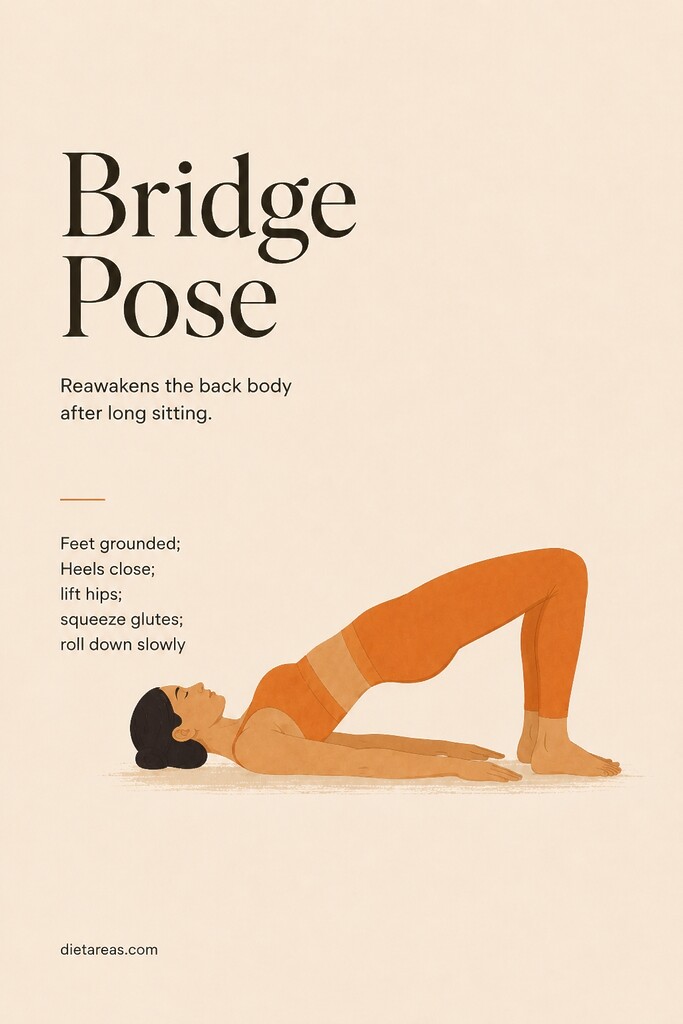
6. Bridge Pose (Setu Bandhasana): Reversing the Slump
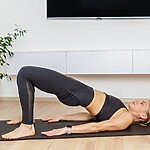
Rolling onto your back for this next move counters the daily effects of sitting at a desk. That hunched posture practically turns off our glute muscles and shortens our hip flexors. Bridge pose forces the back of your body to wake up and do the heavy lifting it was designed for.
Lie flat on your back with your knees bent and feet flat on the floor, hip-width apart.
Walk your heels back until you can barely graze them with your fingertips.
Press firmly into your heels and lift your hips straight up toward the ceiling.
Squeeze your glutes hard at the very top of the movement.
Hold the lifted position for 5 breaths before slowly rolling your spine back down to the mat.
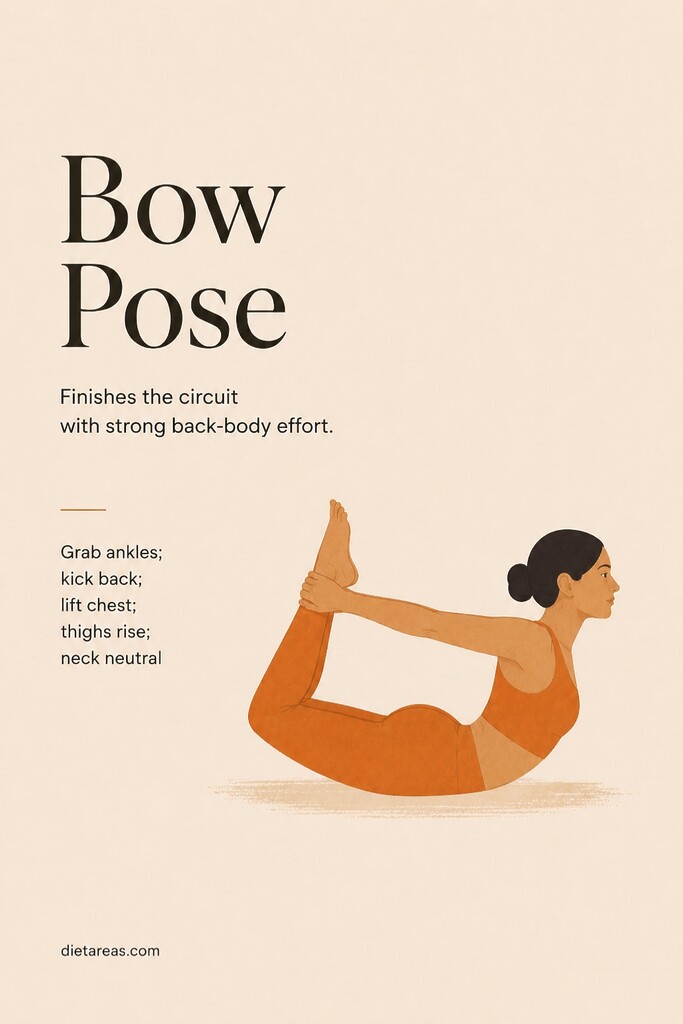
7. Bow Pose (Dhanurasana): The Energy Pull
Flipping over onto your stomach for the final posture takes an immense amount of effort. Because it challenges muscles we rarely use in daily life, opening the front of the body while contracting the entire back is an incredible way to finish the circuit and maximize energy expenditure.
Lie flat on your stomach with your arms resting beside you.
Bend your knees and bring your heels as close to your glutes as possible.
Reach back with both hands and grab the outsides of your ankles.
Inhale deeply, then kick your feet straight back into your hands to lift your chest and thighs off the floor.
Keep your neck neutral and hold the shape for 5 breaths before gently releasing down.
Fueling the Engine You Just Built
These poses successfully trigger the muscle growth that drives fat loss, but the transformation actually happens after you step off the mat. I learned this the hard way while trying to balance restrictive diet rules with normal family meals: if you severely under-eat to speed up weight loss, your body can lower energy expenditure and make fat loss harder to sustain.
Your muscles require protein to recover from these holds, and your metabolism needs consistent, quality calories to keep its fire lit. You are building a powerful metabolic engine with your yoga practice; now you have to feed it. Focus on whole, flavorful foods that make you feel energized, giving your body permission to finally let go of the reserves.
Common Questions About Yoga and Metabolism
How exactly does holding still boost my metabolism?
It comes down to muscle density. Static yoga poses force your largest muscle groups to recruit deeper stabilizing fibers to keep you upright. The more lean, functional muscle you build, the higher your resting metabolic rate becomes. This means your body naturally burns more energy around the clock to sustain that new muscle, long after the workout is over.
How often do I need to do this routine, and when will I see results?
Consistency matters more than intensity. Aim to flow through this sequence three times a week. Because muscle adapts relatively quickly to new tension, you will likely feel increased core stability and better posture within the first two weeks. Visible changes in fat loss and muscle tone usually require four to six weeks of consistent practice, provided your nutrition supports your recovery.
Is this enough on its own, or do I still need cardio?
Movement is a puzzle, and an intentional yoga for metabolism boost routine is an incredible corner piece. It builds the muscular foundation you need without relying on punishing intensity. However, pairing this routine with a daily brisk walk provides a much more well-rounded approach to heart health and sustained fat loss.
Your mat is not a place to punish yourself for what you ate yesterday. It is just a dedicated rectangle where you practice carrying your own weight. Tomorrow, unroll it, take a deep breath, and start building again.


 This post may contain affiliate links.