The minute you declare a food off limits, it becomes the only thing you want to eat. It is just human nature to crave what we are told to avoid. You really do not need another miserable restriction phase to feel comfortable in your own skin.
I spent years battling PCOS and insulin resistance. I fully believed I had to strip my pantry bare to fix the problem. Instead of healing my metabolism, I just ended up exhausted and hungry all the time. The real shift happened when I stopped subtracting and started adding.
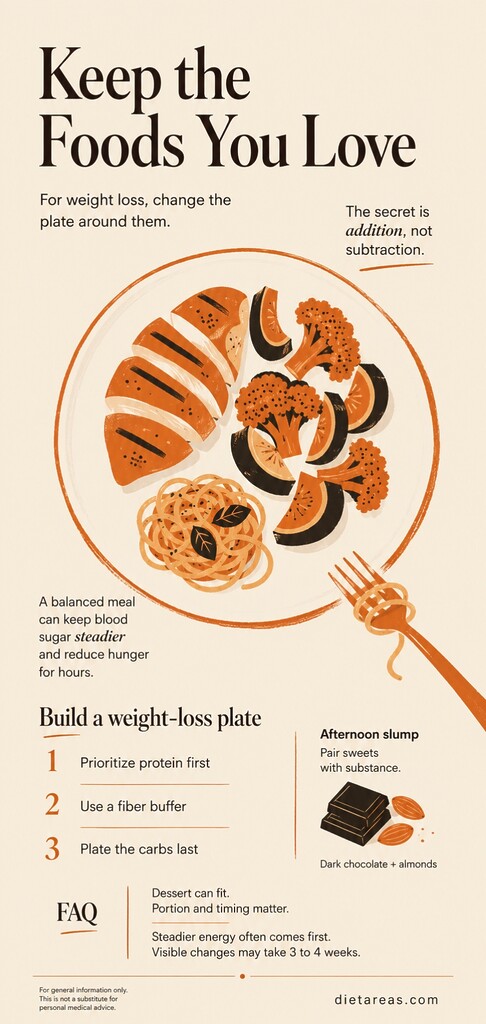
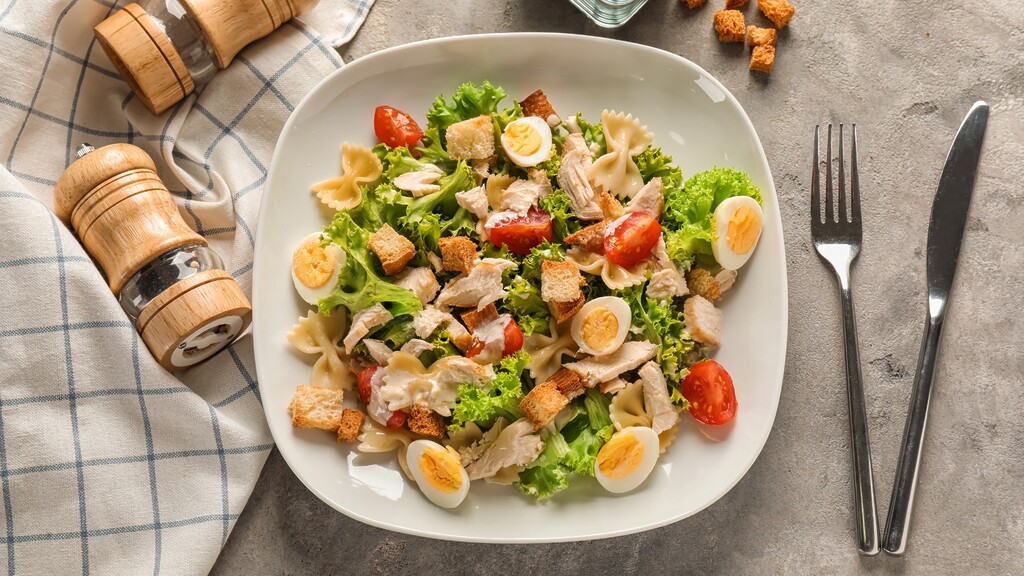
Adding protein and fiber to a bowl of pasta does increase the calories of that specific meal. But here is the biological mechanism that actually helps drive the weight loss: a complete, balanced meal can help keep your blood sugar steadier and reduce physical hunger for hours. That can make it easier to eat fewer total calories across the week because you stop snacking constantly and bingeing at night. You add healthy elements to the plate to create the overall calorie deficit.
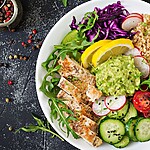
How to Build a Weight Loss Plate
Digestion speed determines everything. Refined carbohydrates on their own can break down quickly and raise blood sugar and insulin. But when you wrap those same carbohydrates in protein and fiber, digestion can slow down, and the glycemic response can drop. You get steadier energy and stay full for hours.
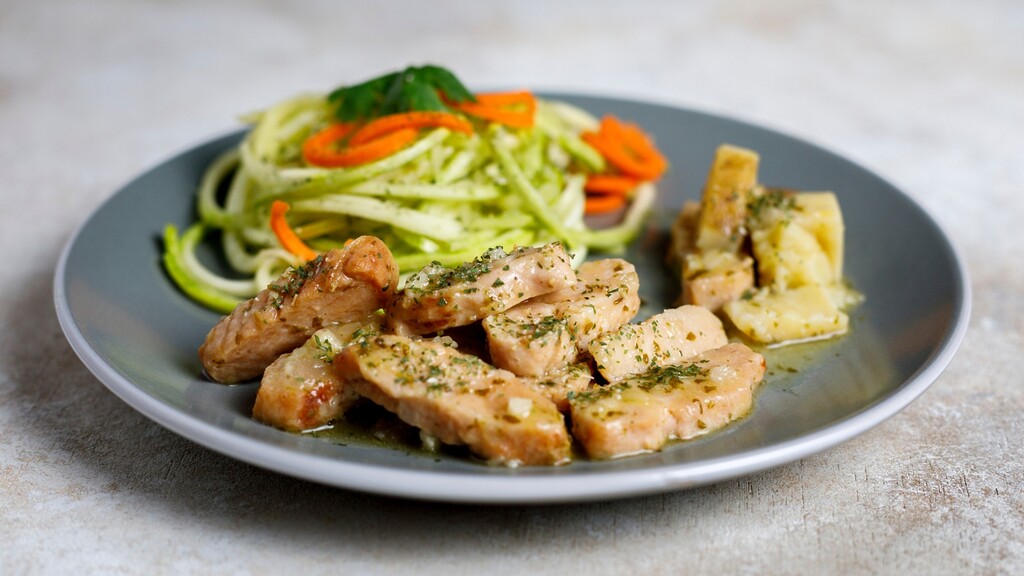
Think about a big bowl of creamy ricotta pasta. If you eat just the pasta, you will probably be hungry again in an hour. Toss in some roasted zucchini and spicy chicken sausage, and suddenly you have a rich, satisfying meal that supports your goals. You can lose weight without giving up carbs as long as you change the context of how you eat them.
Step 1: Prioritize Protein First
Protein is the structural anchor of flexible eating for weight loss. It helps quiet hunger signals more than many other macronutrients. Eat your protein source first before moving on to the carbohydrates on your plate. This can slow the meal down and may reduce the glycemic response of whatever you eat next.
Step 2: Use the Fiber Buffer
Fiber provides physical volume in your stomach without adding excess calories. Roasted broccoli, a handful of raspberries, or a simple side salad act as a buffer. If you really want a slice of fresh sourdough bread, just pair it with a high-fiber vegetable. The bread still tastes amazing, but the fiber can help soften the subsequent energy crash.
Step 3: Plate the Carbs Last
You never have to give up your favorite foods. You just let the protein and fiber take up the majority of the plate, leaving a deliberate space for the sourdough bread or the creamy pasta. The carbohydrates become the delicious accent rather than the entire meal, allowing you to enjoy the exact flavors you love while keeping your total portions naturally in check.
Handling the Afternoon Slump
On the days I walk my golden retriever, Barnaby, around the neighborhood for an hour, my appetite completely spikes by the afternoon. I used to try white-knuckling through the hunger until dinner time. Now I just make a small plate.
Trying to ignore genuine hunger is the easiest way to guarantee you will overeat later in the evening. A preventative snack is one of the most effective sustainable weight loss tips you can implement. The key is pairing. If you want a piece of dark chocolate at three in the afternoon, never eat it completely alone. Pairing it with a handful of almonds gives you the crunch and sweetness you want, plus the fat and fiber that can help soften the glucose spike.
The goal is not to eat as little as possible until you break. The goal is to eat enough of the right things so you never feel broken.
Frequently Asked Questions
Can I really eat dessert every single day?
Yes, you absolutely can. Portion size and timing make the entire difference. Enjoying a slice of chocolate cake right after a protein-heavy dinner may blunt the metabolic impact compared to eating sugar completely alone on an empty stomach. As mentioned with the afternoon snack, always pair your sweets with substance.
How long does it take to see results this way?
Most people notice a massive shift in their daily energy levels and cravings within the first two weeks. Physical changes take roughly three to four weeks to become visible. Focus entirely on how your clothes fit and how steady your energy feels rather than stressing over daily scale fluctuations.
True food freedom does not mean eating without any boundaries at all. It means understanding exactly how your body processes fuel so you can build a lifestyle that actually lasts. The next time you sit down to eat your favorite meal, stop asking what you need to take away. Start asking what you can add to the plate to make it complete.


 This post may contain affiliate links.