We see the aesthetic videos of people gliding effortlessly on expensive machines, but the reality of this practice is much more grounded. It is a functional movement system designed to rebuild your physical foundation from the inside out. If you are exhausted by high-intensity routines that leave you drained and ravenous, this might be your turning point.
Most fitness programs focus on the mirror muscles. Pilates focuses on the deep stabilizers. The movements target the transverse abdominis, the pelvic floor, and the tiny muscles surrounding your spine. When you strengthen these areas consistently, your posture can start to shift. You stand taller, your joints feel supported, and the chronic lower back ache from sitting at a desk begins to fade.
When I was managing my own hormonal health and PCOS, I learned that a stressed body holds onto everything. Spiking my cortisol with endless cardio only made me hungrier and more fatigued. Pilates gave me a way to build deep core strength without the metabolic crash. It teaches your nervous system to stay calm while your muscles work hard.
The goal is not to burn yourself to the ground. The goal is to build a body that feels good to live in.
You are essentially lubricating your joints while building muscular endurance. Focusing on control rather than speed forces your muscles to work harder, which is why a slow twenty-minute mat session can leave your core shaking.
Pilates vs Yoga: Understanding the Difference
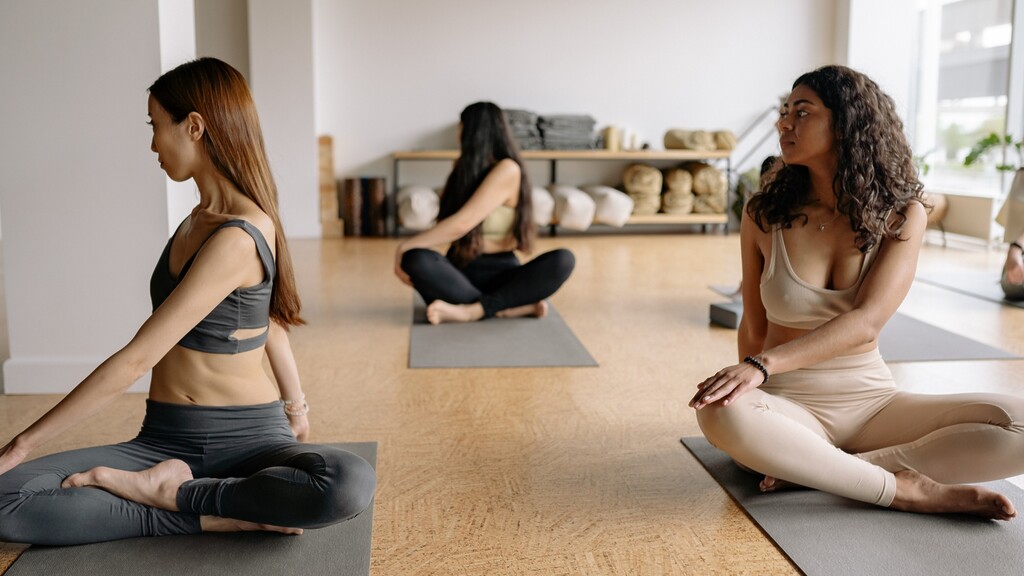
People often group these two together because they both happen barefoot on a mat. The intentions behind them are quite different.
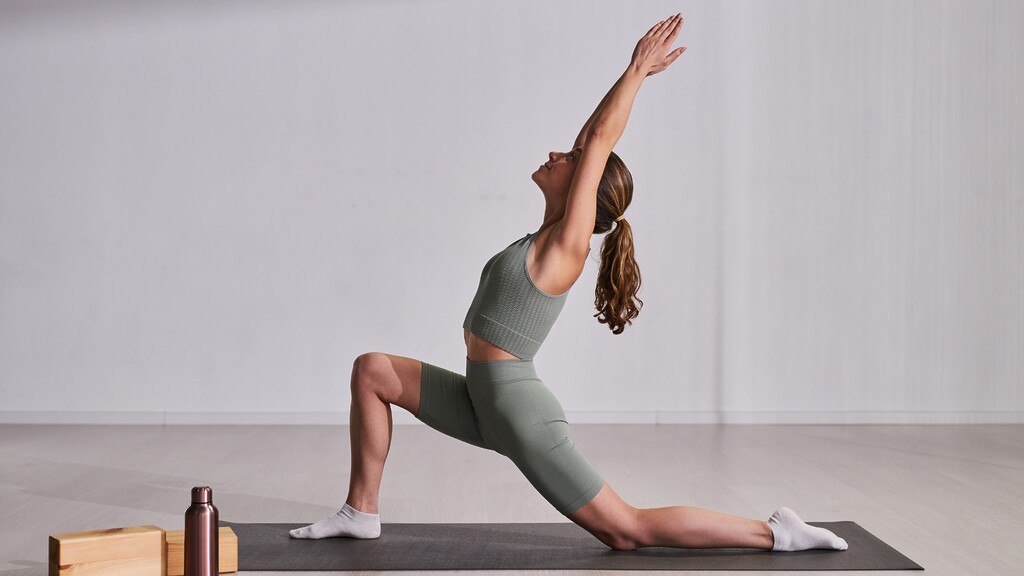
Yoga is deeply rooted in flexibility, breath, and spiritual connection. You hold poses to open up the body and improve your mobility. Pilates is rooted in physical rehabilitation and resistance. Every movement originates from the core, known in this practice as the powerhouse. While yoga asks you to sink into a stretch, Pilates asks you to stabilize your trunk while moving your limbs against gravity.
If you want to loosen tight hips and find mental stillness, unroll a yoga mat. If you want to fix your posture and build a resilient core, start with Pilates.
The Truth About Pilates for Weight Loss
Let us be entirely honest about weight loss. You cannot out-train a diet that does not support you, and Pilates is not a massive calorie-burning furnace. If you take a class expecting the sweat of a spin session, you will be disappointed.
Yet many people swear it helped them lean out. Why does this happen?
First, it builds lean muscle mass, and muscle is metabolically active tissue. The more muscle you have, the more energy your body requires at rest. Second, it drastically improves body alignment. When your shoulders are pulled back and your deep core is engaged, your physical shape looks entirely different, regardless of the scale.
Finally, because it avoids the aggressive pounding of heavy cardio, it spares you the intense hunger crashes that often follow high-intensity training. You build strength in a way that feels sustainable, creating an environment where your body feels safe enough to let go of weight naturally.
4 Essential Beginner Moves to Try Today
You do not need a reformer machine. The original method was designed entirely for the mat. Grab a thick towel or a mat, clear some space, and try these foundational movements.
Before you drop into the first move, you have to understand the breath. If you breathe deeply into your belly, you lose your core support. Focus on sending the air into the sides and back of your ribcage. Inhale through your nose to widen the ribs, and exhale forcefully through your mouth, using that exhale to pull your abdominals inward. This lateral breath is the secret to protecting your lower back.
To turn these four moves into a complete twenty-minute workout, cycle through the entire sequence four times, taking a sixty-second break between rounds. Move slowly. If you rush, you lose the benefit.
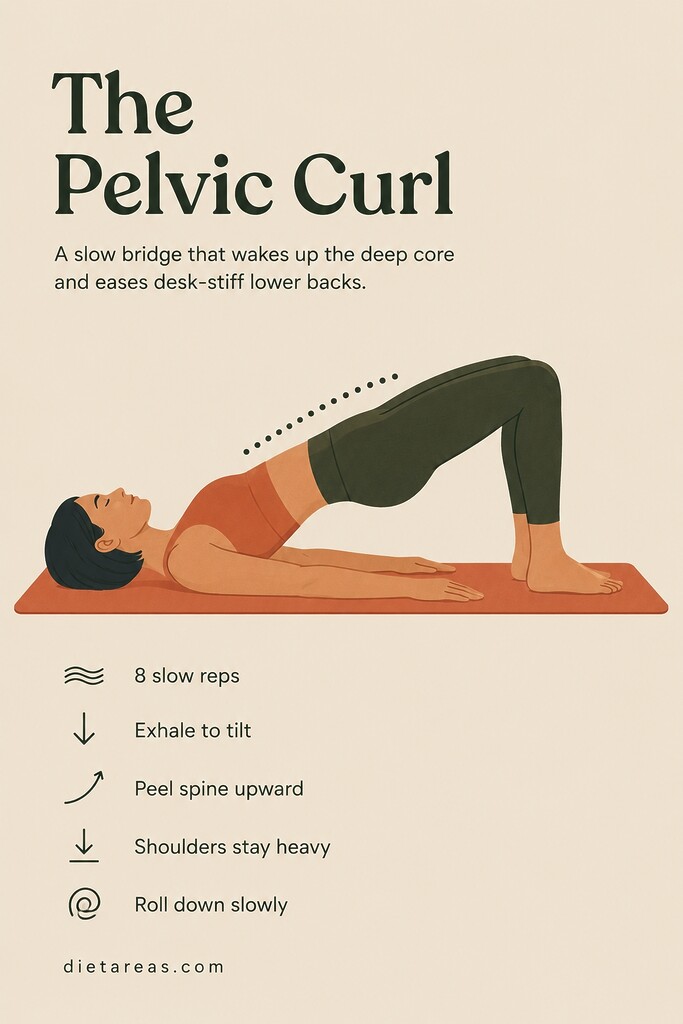
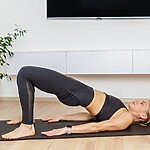
1. The Pelvic Curl (8 reps)
Lie on your back with your knees bent and feet flat on the floor. Inhale to prepare. As you exhale, tilt your pelvis toward your ribs, flattening your lower back into the mat. Slowly peel your spine off the floor one vertebra at a time until you are resting on your shoulder blades. Inhale at the top, then slowly roll back down.
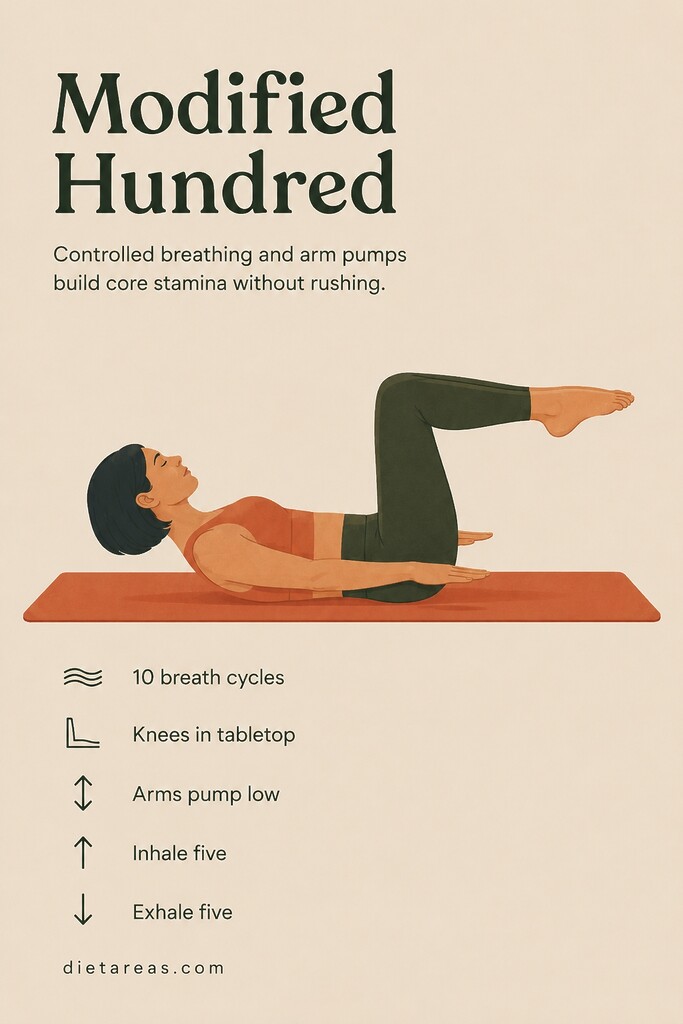
2. The modified Hundred (10 breaths)
Stay on your back. Bring your knees up so your shins are parallel to the ceiling. Lift your head and shoulders slightly off the mat, reaching your arms forward. Pump your arms up and down a few inches, inhaling for five pumps and exhaling for five pumps. Repeat this full cycle ten times to hit one hundred pumps. Rest your head flat if your neck strains.
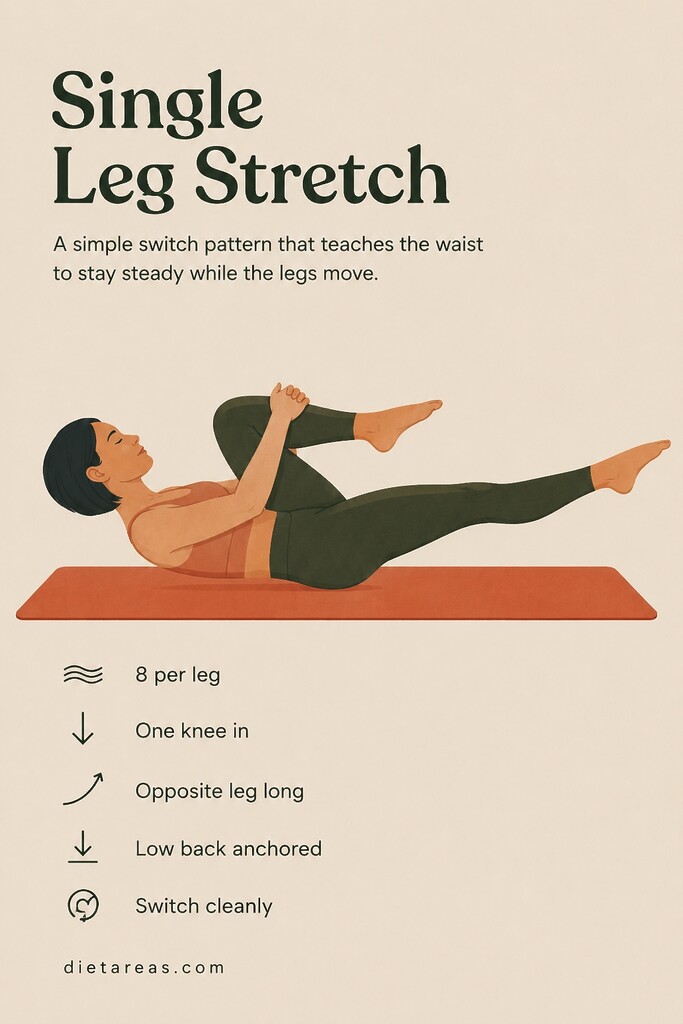
3. Single Leg Stretch (8 reps per leg)
Keep your head and shoulders lifted. Pull your right knee into your chest with your hands while extending your left leg straight out, hovering just above the floor. Switch legs cleanly. Keep your lower back glued to the mat throughout the entire sequence.
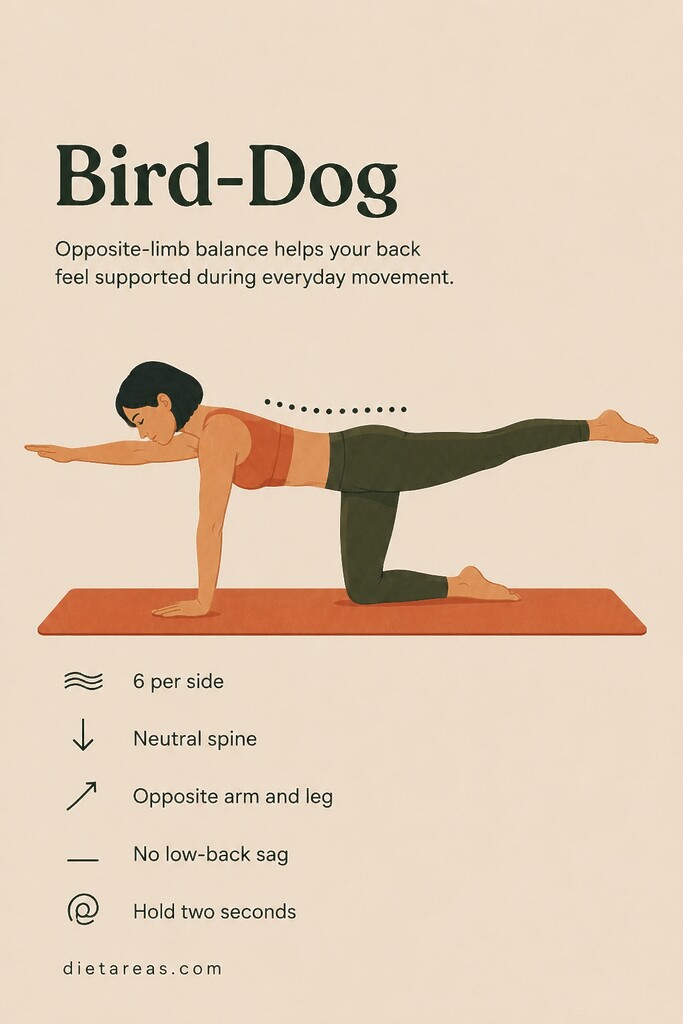
4. Bird-Dog (6 reps per side)
Flip over onto your hands and knees. Keep your spine perfectly neutral. Extend your right arm forward and your left leg backward simultaneously. Do not let your lower back sag. Hold for two seconds, return to the start, and switch sides.
Common Questions Before You Start
Do I need a reformer to see results?
Absolutely not. The reformer is a brilliant tool for adding spring resistance, but gravity and your own body weight are more than enough to build serious strength. Start on the mat. Once you master the mechanics of your own body, you can always explore the machines later.
Is this enough of a workout on its own?
Yes, especially if you are consistent. Completing a focused twenty-minute circuit like the one above two or three times a week can start to change your alignment and core strength. For heart health, I recommend pairing it with a simple daily walk. You do not need to complicate your routine to see profound changes.
You do not need to push yourself to the point of exhaustion to see your body change. Sometimes you just need to slow down, find your alignment, and breathe.

 This post may contain affiliate links.