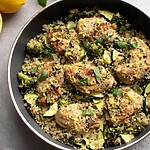
Skillet Lemon-Basil Chicken and Quinoa
A bright, satisfying one-pan meal featuring seared chicken breast and fluffy quinoa cooked alongside crisp-tender zucchini and broccoli. Finishing the dish with fresh lemon zest, juice, and sweet basil gives it a vibrant, summery flavor profile with minimal cleanup.
- Total Time40 minutes
- Yield4 servings 1x
Ingredients
Scale
Chicken & Marinade
- 1 pound (450g) boneless, skinless chicken breasts, cut into 2-inch chunks
- 1 tablespoon olive oil
- 1 tablespoon Dijon mustard
- 1 teaspoon dried oregano
- ½ teaspoon garlic powder
- ¼ teaspoon freshly ground black pepper
Quinoa & Vegetables
- 1 tablespoon olive oil
- 1 small yellow onion, diced
- 3 large cloves garlic, minced
- 1 cup (170g) dry white quinoa, rinsed and drained well
- 2 cups (475ml) unsalted vegetable broth
- 2 ½ cups (225g) bite-sized broccoli florets
- 1 ½ cups (about 1 medium) diced zucchini
Finishing Touches
- 1 medium lemon, zested and juiced
- ⅓ cup loosely packed fresh basil, finely chopped
- ¼ teaspoon kosher salt (optional, to taste)
Instructions
- Marinate the chicken: In a medium bowl, toss the chicken chunks with the olive oil, Dijon mustard, dried oregano, garlic powder, and black pepper. Stir until the chicken is evenly coated. Set aside while you prep the remaining ingredients.
- Sear the chicken: Heat a large, deep skillet or braiser over medium-high heat. Add the marinated chicken in a single layer. Sear without moving for 3 minutes to develop a golden crust, then flip and cook for 2 more minutes. The chicken will not be fully cooked yet. Transfer the chicken to a clean plate and set aside.
- Sauté the aromatics and toast the quinoa: Reduce the skillet heat to medium. Add the remaining 1 tablespoon of olive oil, followed by the diced onion. Cook for 3 to 4 minutes until softened and translucent. Stir in the minced garlic and rinsed quinoa. Toast everything together, stirring frequently, for about 2 minutes until the quinoa smells lightly nutty.
- Start the simmer: Pour in the unsalted vegetable broth, scraping up any browned bits from the bottom of the pan. Bring the liquid to a rapid simmer, then reduce the heat to medium-low. Cover the skillet tightly with a lid and cook for 10 minutes.
- Steam the vegetables and finish the chicken: After 10 minutes, quickly remove the lid and arrange the broccoli florets, diced zucchini, and the partially cooked chicken (along with any resting juices) in an even layer over the bubbling quinoa. Replace the lid and continue to simmer for 8 to 10 minutes, or until the vegetables are bright green and crisp-tender, the quinoa has absorbed the liquid, and the chicken reaches an internal temperature of 165°F (74°C).
- Garnish and serve: Remove the skillet from the heat. Scatter the lemon zest, lemon juice, chopped fresh basil, and salt (if using) over the top. Gently fluff the quinoa and fold the ingredients together before serving warm.
Notes
Why It Works
- Staggered cooking times: Adding the broccoli and zucchini halfway through the simmering process ensures they stay vibrant and crisp-tender, rather than turning gray and mushy.
- Toasting the quinoa: Briefly cooking the dry quinoa grains in the pan with the onions and garlic before adding liquid deepens its natural nutty flavor.
- Layered aromatics: Relying on a combination of Dijon mustard, fresh garlic, lemon zest, and basil creates a bold, complex taste profile without needing heavy amounts of added salt.
Common Pitfalls to Avoid
- Wet quinoa: Failing to drain the rinsed quinoa thoroughly can add excess water to the skillet, resulting in a soggy final texture. Shake the sieve vigorously before adding it to the pan.
- Overcrowding the sear: If your skillet is too small, the chicken will steam instead of browning. Cook in two batches if necessary to get a good crust.
- Lifting the lid too often: Opening the pan releases the trapped steam necessary to cook the grains and vegetables evenly. Only open the lid when it is time to add the vegetables.
Variations
- Different vegetables: Swap the zucchini for diced red bell peppers, or replace the broccoli with chopped asparagus spears.
- Protein swap: Use boneless, skinless chicken thighs instead of breasts, or stir in cooked chickpeas in place of the meat for a vegetarian option.
Calories: 388 | Total Carbs: 38g (Fiber: 6g, Sugar: 4g) | Fat: 12g (Saturated: 2g) | Protein: 32g | Sodium: 215mg | Potassium: 910mg
Nutritional values are approximate, based on standard reference data (USDA FoodData Central). Actual values vary by brand and exact measurements. For precision, use a tracker like MyFitnessPal or Cronometer.
- Prep Time: 15 minutes
- Cook Time: 25 minutes
- Category: Main Course
- Method: Stovetop
- Cuisine: American
Nutrition
- Serving Size: About 2 cups
- Calories: 388
- Sugar: 4g
- Sodium: 215mg
- Fat: 12g
- Saturated Fat: 2g
- Carbohydrates: 38g
- Fiber: 6g
- Protein: 32g